Can We Please Stop Counting Medals?
Indian swimming's medal obsession at the sub-junior level rewards a small handful of swimmers and leaves hundreds of equally hardworking kids feeling like they failed. A swimming parent's case for celebrating personal bests over podiums.
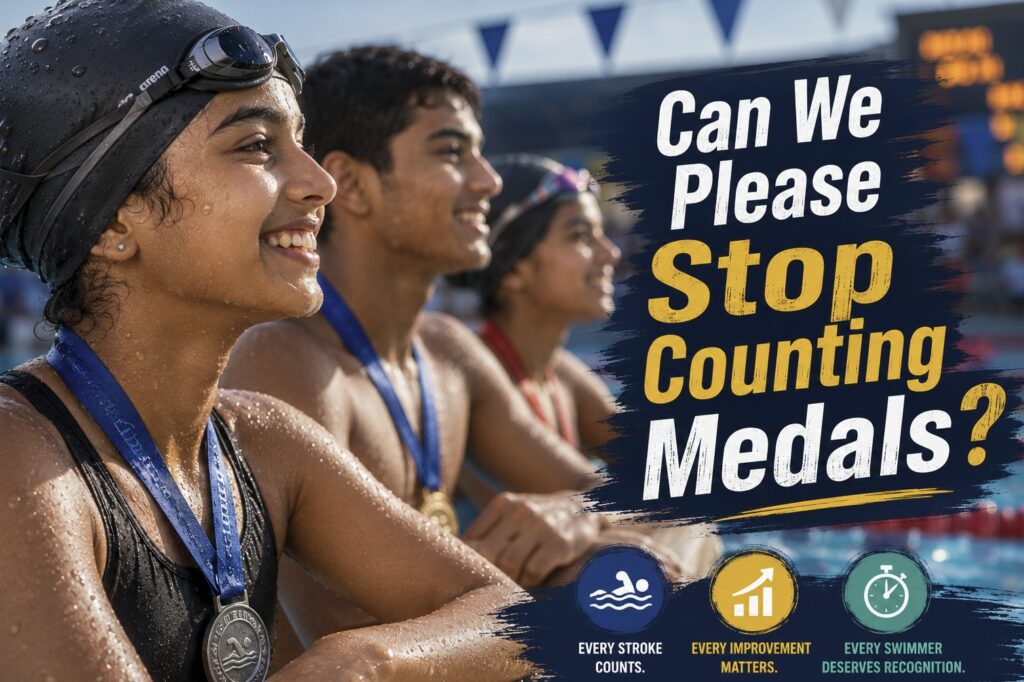
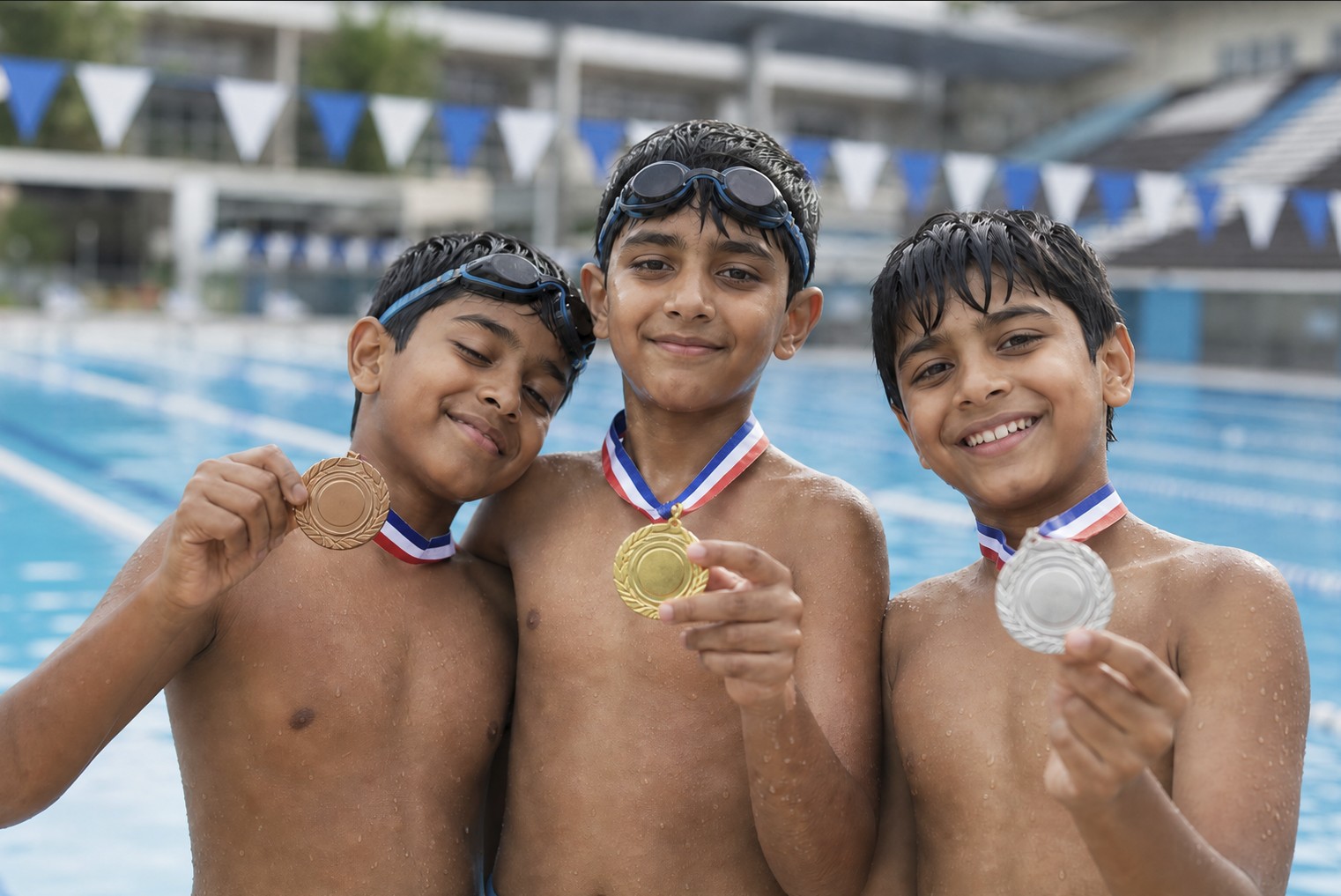
Smiling profile shots. Close-up shots. Smiling faces, medals hanging down the necks. There is happiness, and there is pride.
Social media feeds are now full of such images — of victorious swimmers who have achieved glorious gold, silver, and sometimes bronze positions. There are swimmers who have won selections, who have championships, and then there are the rarer few who have broken records or even made it to the nationals.
Well, we are well and truly in the season now. As the competition dates roll on — and with the final showdown for Bhubaneshwar drawing close — the photos will only get more plentiful. More smiling faces at trials, more coaches and academies posting their swimmers as medallists. Some coaches love graphing out their athletes into numbers — how many podiums, how many medals won.
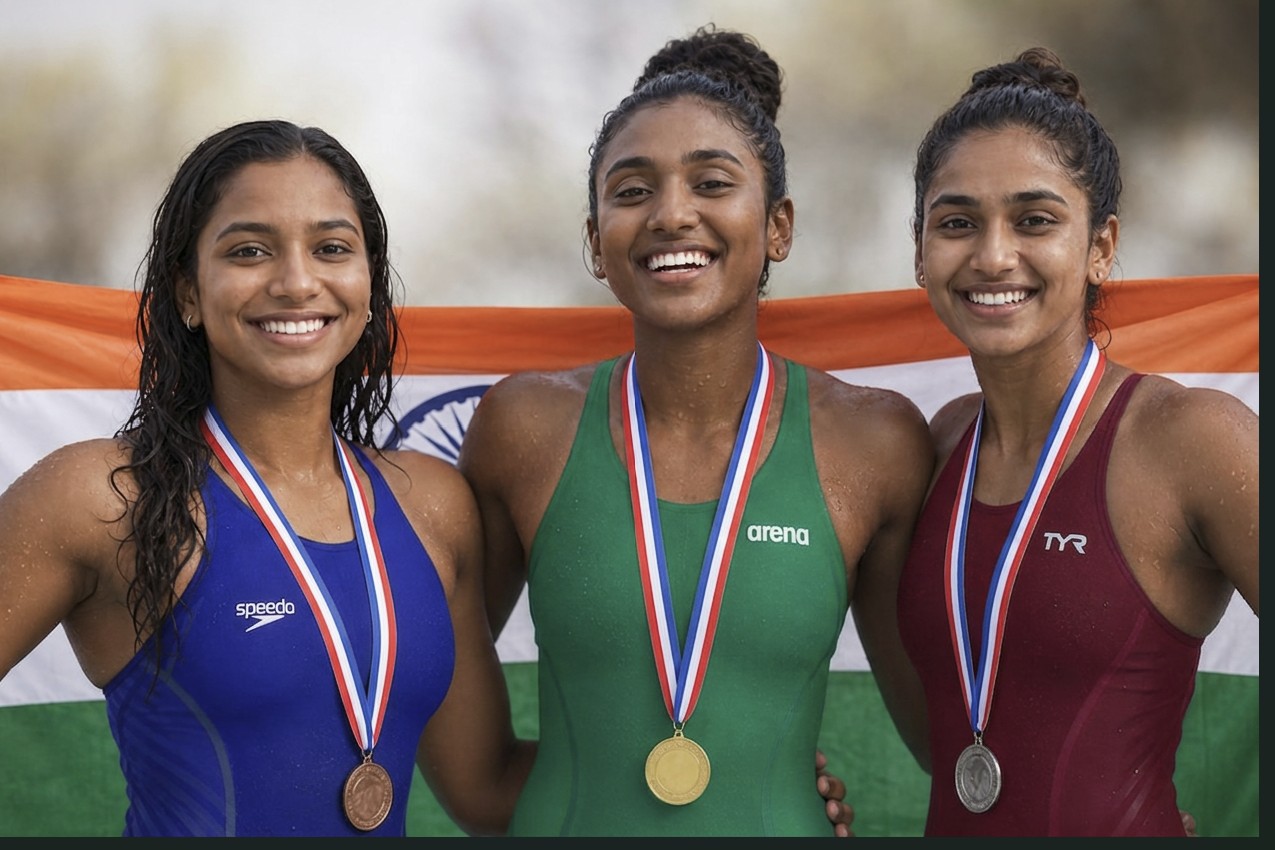
The Same Faces, Every Season
But if you take a step back, you begin to notice a pattern. A few swimmers are winning all the medals — the same faces, the same smiles, showing up year after year on Instagram, Facebook, or anywhere else.
These are a small subset — not really representative of the whole. They are, more often than not, the exception, not the norm. Because if it were the norm, the system would be throwing up new heroes every season — new champions, not the same faces regurgitated over and over.
In every competition there are hundreds of swimmers. Those swimmers haven’t worked any less. They have worked just as hard, all year, and made all the same sacrifices as the ones on the podium.
Excellence Isn’t Rationed
Indian swimming, especially at the junior and sub-junior level, needs to move away from this obsession with medals and victories, and start talking instead in terms of excellence and improvement.
Because excellence, unlike a medal, isn’t rationed. A medal has to be taken away from someone else for you to have it. Excellence doesn’t work that way — every single swimmer in that pool can walk away a little more excellent than they were at the start of the season, regardless of what colour ribbon is or isn’t around their neck. A faster turn, a longer streamline, a stroke count that’s finally coming down — these are real, measurable signs of progress, and they belong to the swimmer who worked for them, whether or not a judge happened to notice.
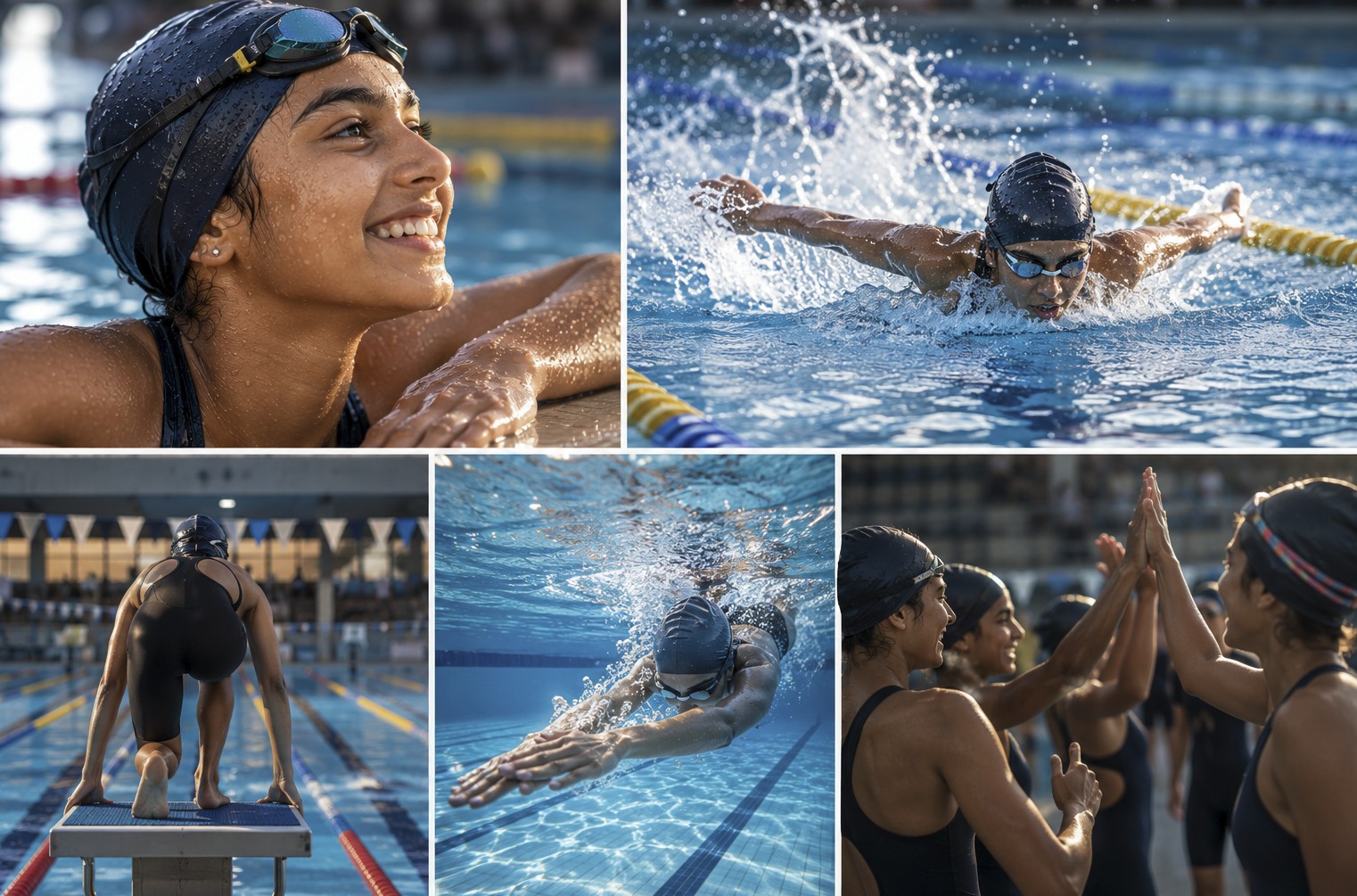
To that end, my humble request to all the coaches and academies is this: while you post photos of your champions, spare a thought for those who performed just as well but didn’t make the podium. Let the trials and the finishes not be a slapdash celebration reserved only for the finishing times at the top. Let it also be a celebration of the many who performed, but weren’t medallists — who showed up with the same spirit, took on the same challenges, and made all the same sacrifices.
All too often, their hard work is reduced to just one question: did you get a medal? Or did you get a DNF? Sadly, competitions have started to feel like exams — where getting selected, or standing on the podium, is the only outcome that counts, and the rest of the effort goes unacknowledged.
But there is more to swimming than just winning. We need to redefine a culture of sportsmanship — reassess our own expectations, and project the sport differently. Celebrate excellence, not just success.
A Confession, From a Swimming Parent
At this juncture, it’s important for me to make a disclosure — as a swimming parent, I too have been guilty of prioritising success and medals. Of being happy when the podium was achieved, and sad when it wasn’t. It has taken us some time to come to terms with this winning-losing cycle.
Yes, there are ups and downs. But PBs are our lodestar. Shifting the focus from medals to personal bests is one way to look at excellence differently.
What We Do Instead
So here’s what we do in our house: we talk about PBs, or Personal Bests, rather than medals. It doesn’t have to be dramatic. Half a second off a personal best, a stroke count that finally comes down by one, a turn held half a beat tighter — these matter as much as any medal, because they’re proof of work, not proof of luck, or a growth spurt, or who happened to be in the next lane. If, at the end of the year, you have bettered your PB — even by the slightest margin — that is a victory. If you’re close to your PB, that’s good enough, and something to build on. And if you’re worse than your PB, that’s not a failure — it’s just next season’s target.
Every meet, win or lose, culminates in a pizza party. Because, in the end, just like any other individual sport — tennis, shooting, athletics — the objective is to become a better version of ourselves. Excellence is not a destination but a journey, and every microsecond cut is indicative of that journey.